
Occupational Hygiene vs Single-Issue Testing: Understanding the Difference
A practical explanation of why scope, bespoke interpretation and long-term exposure strategy matter more than test results alone.
•
By James Hall BEng MSc CertOH LFOH
Occupational Hygiene
Regulatory Guidance
Occupational Hygiene vs Single-Issue Testing: Understanding the Difference
Workplace health and hygiene assessments are often described using similar language — testing, monitoring, assessment, compliance. In practice, however, there is an important distinction between bespoke occupational hygiene work and single-issue testing.
Understanding this difference is particularly important where organisations are seeking defensible decisions, proportionate control, and long-term confidence, rather than isolated results that may require reinterpretation or repetition over time.
This article explains how occupational hygiene work differs from single-issue testing, what each is designed to achieve, and why that distinction matters in practice.
What Is Meant by Single-Issue Testing?
Single-issue testing focuses on answering a specific, narrow question at a particular point in time. Examples include:
Testing the performance of a local exhaust ventilation (LEV) system
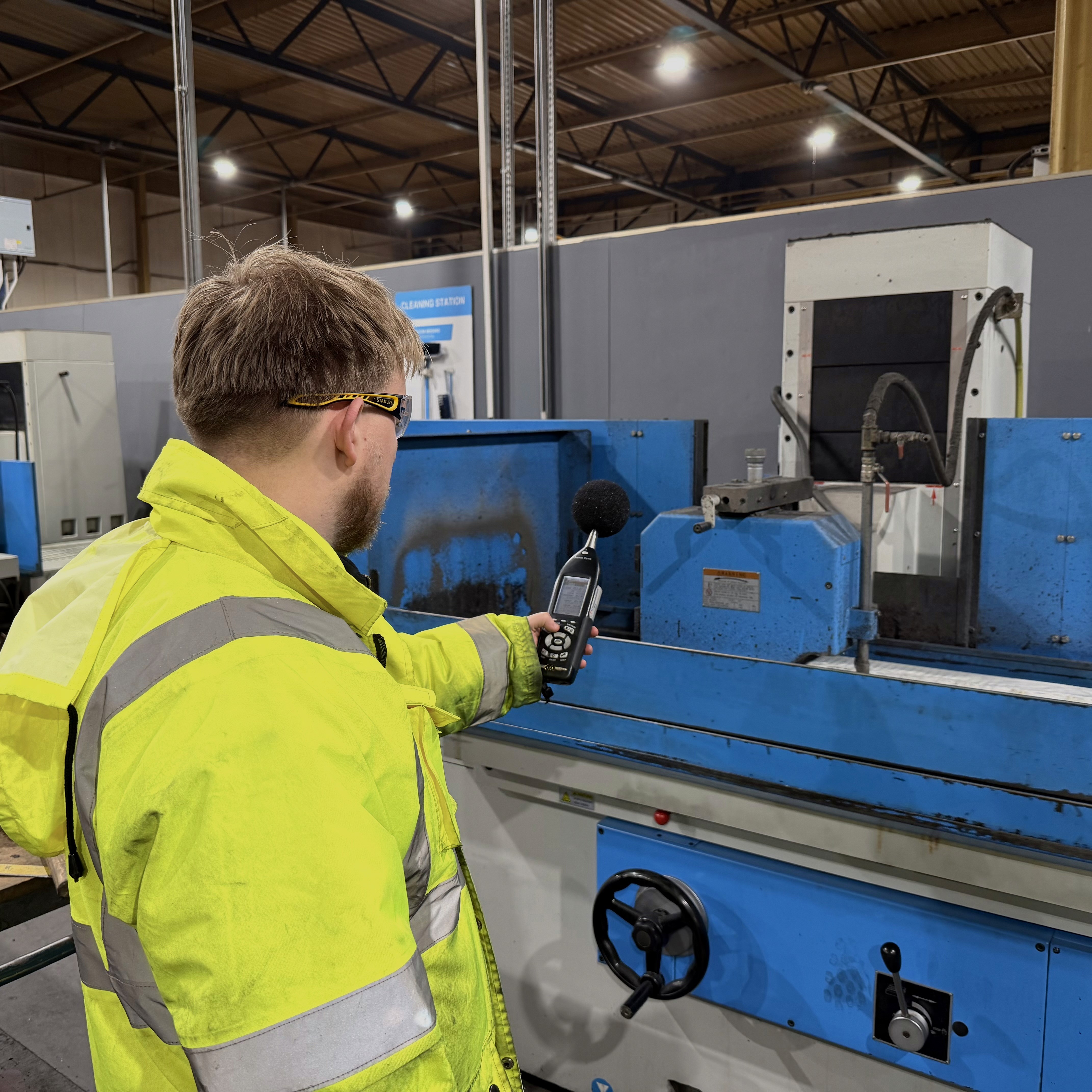
Taking spot noise measurements near a specific item of equipment
Conducting limited sampling to confirm the presence or absence of a substance
These activities can be entirely appropriate where the scope is clearly defined, the risk is well understood or the objective is limited to verifying a single control or parameter. Single-issue testing is typically concerned with whether something meets a particular requirement, rather than how exposure or risk is managed over time.
What Is Occupational Hygiene Work?
Occupational hygiene work is broader in scope. It is concerned with the anticipation, recognition, evaluation, and control of workplace health risks, taking into account how exposure and risk actually occur in practice.
In the UK, occupational hygiene work is delivered by professionally qualified occupational hygienists, often holding licentiate or higher qualifications awarded by the British Occupational Hygiene Society (BOHS). This work considers:
How tasks are carried out in reality
Variability in exposure across people, time, and activities
The interaction between processes, controls, and behaviour
Short-term and long-term exposure
How risks should be managed sustainably
The focus is not just on measurement, but on understanding exposure in context. The difference in scope and interpretation matters because workplace exposure rarely remains static. Occupational hygiene work is designed to account for variability, ensuring that conclusions and recommendations remain defensible, including during engagement with bodies such as the Health and Safety Executive (HSE).
The Difference in Practice
It is important to be clear that single-issue testing is not inherently a lesser form of work. In many situations, it is entirely appropriate and provides valuable information when a specific question needs to be answered. For example, single-issue testing may be used to:
Verify the performance of a particular control measure
Confirm conditions following a change or intervention
Provide targeted evidence for a defined regulatory or operational need
In these contexts, focused testing is both efficient and proportionate — and it forms an important part of many occupational hygiene programmes. The distinction lies not in the quality of single-issue testing itself, but in how the results are used and interpreted over time.
When single-issue testing is carried out in isolation, results are often limited to answering a narrow question at a specific moment. While useful, this can lead to repeated testing, uncertainty about wider exposure, or difficulty translating results into long-term strategy.
When single-issue testing is carried out as part of qualified occupational hygiene work, it becomes significantly more powerful. Results are:
Interpreted in the context of tasks, exposure duration, and variability
Assessed alongside other controls and processes
Used to inform proportionate, longer-term recommendations
Integrated into an overall exposure management strategy
In this way, single-issue testing becomes a component of a broader professional judgement, rather than an endpoint in itself. The long-term outcome is clearer decision-making, more consistent control, and greater confidence that workplace health risks are being managed sustainably.
Long-Term Exposure Management
Occupational hygiene is rarely a one-off requirement. Over time, organisations may:
Modify processes
Introduce new substances
Change work patterns
Expand or adapt facilities
Occupational hygiene work supports organisations across these changes, helping exposure management remain proportionate, consistent, and aligned with regulatory expectations — rather than reactive or fragmented. This long-term perspective is particularly important where organisations want to avoid repeated testing without clear strategic direction.
Choosing the Right Level of Support
Not every situation requires the same level of input. In some cases, single-issue testing may be entirely appropriate. In others, a broader occupational hygiene approach is necessary. The key is ensuring that the scope of work matches:
The complexity of exposure
The potential health risk
The need for defensible evidence
Long-term operational objectives
Understanding the difference between occupational hygiene work and single-issue testing helps organisations choose support that is proportionate, effective and sustainable.
Taking a Proportionate Approach
Occupational hygiene work is not about testing for its own sake. It is about providing clarity, context, and confidence — not just results. Where workplace health risks need to be managed over time, a structured occupational hygiene approach supports better decisions, stronger controls, and more effective long-term outcomes.
NOHH Ltd provides occupational hygiene advice and assessment across a range of industrial environments across the UK, supporting proportionate responses aligned with regulatory expectations. Contact us below for a free consultation from a qualified hygienist.